Pilling • SPF + make-up
SPF Pills Under Make-up: Step-by-Step Diagnosis & Fixes
Pilling isn’t about “a more expensive SPF”. In most cases it’s the amount, timing, and layer compatibility. Here’s a quick diagnosis plus fixes that work immediately.
- Simplify your morning: toner → (́(optionally 1 serum or a light cream) → SPF → make-up.
- Apply SPF in 2 thin layers and let it “set” (light SPF serums 2–3 min, cream SPFs 3–6 min).
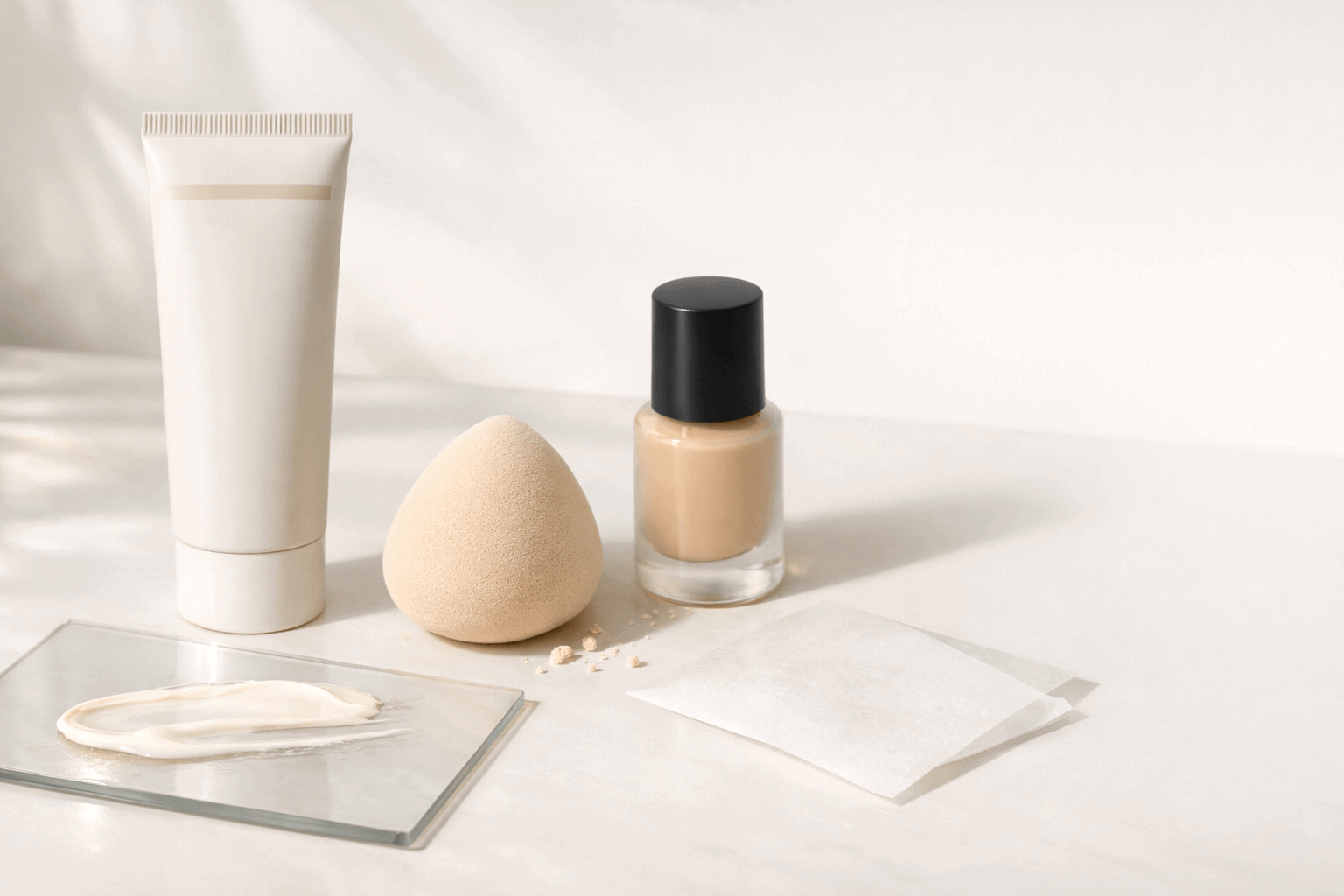
- Apply make-up by tapping/pressing (sponge/fingers) — don’t drag a brush across a still-soft SPF film.
If it happens mainly on dry patches (flaking), it’s often not the product “pilling” but a dry skin surface — then it helps to adjust your base and barrier (links below).
SPF & make-up: where to start
First, choose an SPF texture that fits — then simplify your base (fewer layers = less pilling).
- Face SPF (texture picks)
- Tinted SPF (even tone without foundation)
- BB creams & cushions (coverage + skincare)
- Natural make-up (lightweight finish)
A base that doesn’t pill
If your skin feels tight or flakes, rolling is more likely. Here’s a safe foundation.
- Cleansing (gentle, no tightness)
- Toners & essences (first hydration after cleansing)
- Serums & ampoules (targeted “boost”)
- Creams & emulsions (comfort + barrier support)
1) Diagnosis: why SPF or make-up pills (pilling)
- Test Try “half-face”: on one side do your full routine, on the other skip one step (most often serum or cream). You’ll spot the culprit fast.
- Less If you’re doing 4 layers + SPF + make-up in the morning, go back to the minimum: toner → (optional serum) → SPF.
- Friction Rolling is often mechanical: rubbing with hands, sponge or brush over a “still-soft” SPF film.
- Flakes? If it happens mostly on dry patches, fix the skin surface first: light barrier support + comfort (more tips also in skin barrier repair cream guide).
2) The right SPF amount (and how to apply it without pilling)
- Step 1 After toner/cream, give your skin 1–2 minutes to settle (the surface should feel “dry to the touch”, not slippery).
- Step 2 Spread SPF gently (no pressure) — more “lay it down” than rub. Sensitive skin can also prefer mineral formulas — see mineral vs. chemical SPF.
- Step 3 If it pills around the nose/forehead: reduce cream under SPF, or skip it in the T-zone entirely (for many people, toner + SPF is enough).
3) Wait times: when to apply make-up so it doesn’t clump
- 2–3 min Lightweight SPF serums (often ideal under make-up).
- 3–6 min Creamy SPF (comfortable, but needs more time).
- Tip Apply make-up by tapping/pressing (sponge/fingers) rather than dragging a brush over the surface.
4) Layer compatibility: what most often causes pilling
- Often no An overly “slippery” base (lots of gel layers) + a richer SPF → the film has nothing to grip to. Fix: reduce layers, or swap one gel step for a light cream.
- Often no Too many active steps in the morning (acids / exfoliation / heavy layering) → the surface is more reactive and make-up clings unevenly.
- Sometimes Certain primers (especially if you add more “slip” steps) can increase rolling. Test: primer only after SPF (and always after a pause), or skip primer entirely.
- YES One hydrating step (toner) + one targeted step (serum or light cream) + SPF. Minimalism wins.
5) Reapplying SPF over make-up (without ruining the finish)
- Step 1 Gently press a blotting paper/tissue onto the T-zone (don’t rub).
- Step 2 Reapply in a thin layer (better in sections: cheeks → forehead → nose/chin).
- Step 3 Add “finish”: a touch of concealer only where needed, or lean into a natural look — see natural make-up.
VIONE picks that typically layer well under make-up
Want the shortcut? Here are 4 SPF textures that usually behave “clean” (and layer nicely). If you enjoy a deeper comparison, see our Beauty of Joseon SPF review.
“No-pilling base”: 4 products that often make the difference
If it rolls because of dry patches or an overly slippery base, balanced hydration + barrier support helps. Minimalist: toner → serum → light cream (as needed) → SPF.
Related reading (SPF cluster)
FAQ (quick answers)
Why does SPF pill even when it’s expensive?
Price alone doesn’t solve texture compatibility. Pilling most often happens because layers are too “slippery”, don’t get time to set, or they roll mechanically from friction during make-up. The fastest fix: simplify (toner → SPF), apply SPF in 2 thin layers, and press/tap your make-up on.
Is it better to wait 1 minute or 10 minutes between layers?
In practice, the “middle” works: 1 minute is often too little (the surface is still wet), 10 minutes is usually unnecessarily long. Aim for 2–3 min for lightweight SPF serums and 3–6 min for creamier SPF — the goal is an even film that feels “dry to the touch”.
Can I apply facial oil before SPF?
Usually, I don’t recommend it. Oil on the surface can reduce how well an SPF film adheres and increase pilling risk — especially under make-up. If you have extremely dry skin, use a small amount of cream/emulsion instead, or support your barrier: skin barrier repair cream guide.
It pills only around my nose and chin. What should I change first?
Most often, it’s “too many layers + too little time”. Shorten your routine to toner → SPF, apply SPF in 2 thin layers, and tap/press your make-up on. If skin is flaking in that area, check your cleansing too: gentle cleansing (no tightness).
Is mineral or chemical SPF better under make-up?
Chemical SPF is often more invisible and very lightweight; mineral can feel more satin-like and suit sensitive skin. Practical comparison: mineral vs. chemical SPF.
Is a BB cream with SPF enough?
Usually not — we apply BB/cushion in a smaller amount than a full SPF layer. Treat them as make-up with a bonus. If you want “one step” natural evenness, explore BB creams & cushions or tinted SPF.